Skip to content

Philosophy — OLIVEA

Origin, identity, efficiency, innovation, gastronomy, and community — from garden to table.
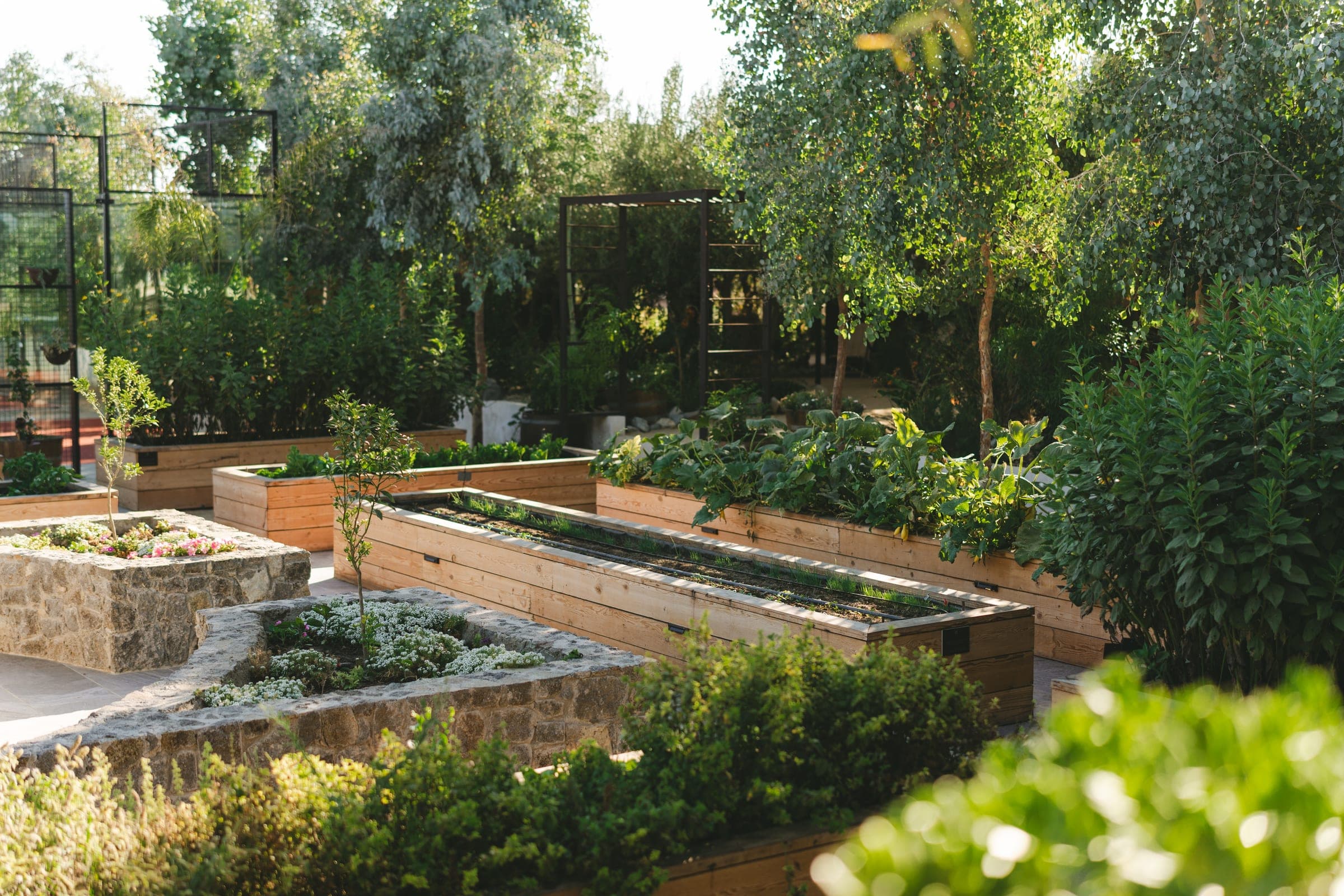
The OLIVEA garden in Valle de Guadalupe — olive trees, raised beds, and the surrounding Baja California desert landscape.

Origins

Olivea opened in late summer 2023. It was initially conceived as a simple, calm retreat — low marketing, easy to operate. But the project evolved and asked for more intention. What emerged was not just a property but a living system with distributed responsibility.

Ange Joy, founder and designer, shaped the physical space and atmosphere — design as a conscious reading of place. Cristina, a psychologist leading HR, built the internal culture, treating it as true infrastructure. Adriana Rose, CEO with a background in computer science and an MBA, brought alignment and systematic thinking: urgency that organizes rather than pressures.

Together, they established a foundation where design decisions are grounded in operational reality, culture is infrastructure, and clarity comes before expansion.

Vision & Identity

Olivea is an ecosystem — not a hotel, a restaurant, and a café that happen to share a property. One unified philosophy connects every expression: Farm To Table, Café, and Casa Olivea.

The central symbol is an alebrije — a Mexican mythical hybrid creature — specifically an insect with an olive body, olive-leaf wings, and a radish head. It represents garden, growth, and nourishment. The same alebrije appears across all three properties in different positions, emphasizing coherence over uniformity.

Sustainability

In Valle de Guadalupe — where water is finite and electricity unreliable — sustainability is not ideology; it is efficiency and respect practiced daily. It is infrastructure.

  • Solar energy ensures operational continuity.
  • Grey water is reused for irrigation.
  • Vegetables are washed under running water that is then collected and directed to irrigate specific areas of the garden.
  • Centerpiece plants on dining tables serve as living nurseries — they return to the garden when their time at the table ends.
  • Connected kitchens share resources across properties.
  • A continuous cycle: garden → Farm To Table → Café → fermentation → compost → back to garden.

The pursuit is zero waste — not claimed as perfected, but constantly measured and adapted.

Technology & Innovation

Technology at Olivea is intentionally quiet and invisible. It exists to bring clarity, consistency, and improvement — not spectacle. It lives in scheduling, energy monitoring, knowledge systems, and feedback loops that reduce friction and increase focus.

Innovation is not about novelty; it is about asking better questions. How can teams work more intelligently? How can systems support people rather than replace them? How can hospitality become calmer, clearer, and more human?

This is where roseiies lives — our own studio, built to give Olivea its quiet technology: the living menus, the reservations, and the knowledge systems that let a small team hold a large vision. Innovation here looks like less friction, not more screens.

Gastronomy

The garden is the essence but not the only voice. Cooking at Olivea emphasizes origin and restraint — using what the territory of Valle de Guadalupe, Baja California gives, without forcing.

Olivea functions as a complete gastronomic ecosystem: guests stay where food is grown and eat there morning and night. Chef Daniel Nates embodies the philosophy — curious, disciplined, precise — understanding origin and restraint. Every dish carries a season, a decision, and a place: garden and coast, technique and memory, Baja and Mexico.

Gastronomy becomes a dialogue between garden, sea, kitchen, and guest.

Community

Team members at Olivea become Colibríes (hummingbirds) — representing precision, generosity, and purposeful movement. Culture is treated as a living system that requires daily attention and care.

The approach emphasizes healthy work rhythms, conscious nourishment, real rest, and emotional well-being as part of the system — not benefits adjacent to it. Community is reciprocity: “You take care of me. I take care of you. And together, we take care of the place we share.”

Hospitality is choreography — each movement intentional, each role connected to the whole.

Common questions

Why is it called Olivea? What does the name Olivea mean?
Olivea (IPA /oˈli.βe.a/ — o-LEE-beh-a) is a feminine name of Latin origin, derived from oliva, the olive. The olive tree symbolizes peace, prosperity, wisdom, and continuity: it grows slowly, adapts, and endures. For Olivea this meaning is not symbolic — it is structural.
What is Olivea?
Olivea is not a hotel, a restaurant, or a café — it is an ecosystem in Valle de Guadalupe, Baja California, Mexico. Casa Olivea (the farm stay), Olivea Farm To Table (the MICHELIN-starred restaurant), and Olivea Café Wine Bar are different expressions of the same core, unified by one philosophy and one working garden.
What does the Olivea logo mean?
The logo is an alebrije — in Mexican culture, a mythical hybrid being assembled from different animals, each part carrying meaning. Olivea's alebrije is an insect: an olive as the body, olive leaves as wings, and a radish as the head. Individually each part has its own identity; together they form something alive.
How is Olivea sustainable?
At Olivea sustainability is efficiency — not a trend and not a label, but respect made practical. In Valle de Guadalupe water is finite and electricity is unreliable, so sustainability is infrastructure rather than ideology: solar energy, water reused rather than discarded, and a cycle that carries the garden through the kitchens and back to the soil.
When did Olivea open?
Olivea opened in late summer of 2023. It was first conceived as something simple — a calm, easy-to-operate retreat — but as the land was worked and the garden began to respond, it became clear the project was asking for more intention rather than more scale.
Philosophy

Where the garden is the essence

Olivea (IPA: /oˈli.βe.a/ o-LEE-beh-a) is a feminine name of Latin origin, derived from oliva, the olive.

The olive tree symbolizes peace, prosperity, wisdom, and continuity. It grows slowly, adapts, and endures. For us, this meaning is not symbolic — it is structural.

This page holds what Olivea is made of: values, systems, and decisions. Not as a promise, but as a practice.

Guiding principle

At Olivea, sustainability is efficiency, not as a trend, not as a label, but as respect made practical.

Present in every decision, not confined to a single chapter.
Garden-firstEfficiency as respectConscious technologyColibríes
Scroll to read
Chapter 01
Practices
Ver
  • Design decisions grounded in operational reality
  • Culture treated as infrastructure
  • Clarity before expansion
  • Standards built to last

Origins

When a quiet idea asked for more.

Late summer 2023A family systemUrgency as alignment

Olivea opened in late summer of 2023.

In the beginning, the project was conceived as something simple: a calm, easy-to-operate place. A retreat project. Low pressure. Limited marketing. No defined brand vision.

But life had other plans.

As the land was worked and the garden began to respond, it became clear that Olivea was asking for more. Not more noise. Not more scale. But more intention.

From the very beginning, this was a family project.

A family system is also a form of sustainability: distributing responsibility to support the long term.

Not only as a bond, but as a way of building: shared decisions, distributed responsibility, and sustained attention over time.

Ange Joy, founder, is a trained designer. From that foundation, she led Olivea through design, as a conscious reading of space: orientation, light, circulation, landscape, and atmosphere in service of calm. Decoration was only the starting point; design became an organizing tool that aligns function with emotional coherence. In parallel, structure began to take form: systems designed to support everyday reality, processes built to endure, decisions anchored in logic, feasibility, and consistency. Intuition found its support.

From Human Resources, Cristina, a psychologist by training, was involved from the very beginning, shaping internal culture long before it became visible to guests. Because at Olivea, culture, like soil, must be prepared long before anything can bear fruit. Not as discourse, but as living infrastructure: what sustains the team, and therefore the experience.

Adriana Rose, now CEO, arrived later. And that timing mattered.

With an MBA, a master’s degree in Computer Science, and an international background, Adriana brought urgency, not the kind that rushes, but the kind that aligns. Vision became direction. Intuition became systems. What had been growing organically began to hold together.

Over time, the project required alignment. Not to accelerate, but to bring order.

Different disciplines. One shared responsibility.

Design, operations, people, and systems moving together, not to control the project, but to accompany it toward where it was clearly headed.

This is how Olivea came into being: not as an individual gesture, but as a living system, attentive, continuously evolving.

Chapter 02
Practices
Ver
  • A unified language across hotel, restaurant, and café
  • Design choices that reinforce one philosophy
  • Distinct identities that still feel related

Vision

What guides the decisions.

One living logoCoherence over uniformityThe garden as origin

Olivea is not a hotel. It is not a restaurant. It is not a café.

It is an ecosystem.

And an ecosystem requires coherence: decisions that reduce friction, avoid excess, and sustain continuity.

The hotel, the restaurant, and the café are different expressions of the same core, unified by one philosophy.

That unity lives in our logo: an alebrije.

In Mexican culture, an alebrije is a mythical being, imagined, hybrid, composed of different animals, each carrying meaning. Individually, each part has its own identity. Together, they form something alive.

Our alebrije is an insect: an olive as the body, olive leaves as wings, and a radish as the head.

Garden. Growth. Nourishment.

You'll find the same alebrije across Olivea, in the hotel, the restaurant, and the café, always the same creature, positioned differently. Because Olivea is one living system, experienced from multiple perspectives.

We do not aim for uniformity. We aim for coherence.

Chapter 03
Practices
Ver
  • Solar energy as operational stability
  • Grey water reuse where possible
  • Washing produce in buckets (with water reuse)
  • Centerpiece plants as living nurseries
  • Connected kitchens that share resources
  • Fermentation + compost returning to the garden
  • Zero-waste pursuit (without pretending perfection)

Sustainability

Systems, not gestures.

Solar for continuityWater as sacredA closed loop

At Olivea, sustainability is efficiency, not as a trend, not as a label, but as respect made practical.

In Valle de Guadalupe, resources are not abstract. Water is finite. And electricity is unreliable.

Power outages happen. Systems turn on and off. Kitchens pause. Refrigeration becomes fragile. In this context, sustainability is not ideology, it is infrastructure.

This is why solar energy became essential at Olivea. Not to make a statement, but to ensure continuity.

Solar systems allow us to operate with stability, protect food and equipment, and reduce dependence on a grid that cannot always be trusted. Energy here is designed as a backbone, measured, monitored, and integrated into daily operation.

Water demanded the same responsibility.

Vegetables are washed under clean, running water. The water used is collected and redirected to irrigate specific areas of the property that require additional nutrients.

Water flows with intention and it is integrated into grey water systems. Nothing is wasted by default.

Even our centerpieces are part of the system. Plants placed on tables are not decoration, they are living nurseries. Roots continue to grow. When their time on the table ends, they return to the garden.

Our kitchens are deeply connected. What one cannot use, the other often can.

The cycle is continuous: garden → Olivea Farm To Table → Olivea Café Wine Bar → fermentation → compost → back to the garden.

We are constantly pursuing zero waste, while being honest that perfect zero may not be fully attainable today. That uncertainty does not discourage us. It sharpens our discipline.

We measure. We adapt. We try again.

Chapter 04
Practices
Ver
  • Tools that reduce friction and increase clarity
  • Systems tested in real operations
  • Small improvements shipped continuously
  • Technology in service of people and land

Technology

Tools in service of clarity.

Invisible techMeasured iterationCalm by design

Technology at Olivea is intentionally quiet.

It exists to bring clarity, consistency, and improvement, not spectacle.

Because waste also appears as confusion: lost time, depleted energy, and fragmented attention.

Here, technology lives inside daily work: in scheduling, energy monitoring, knowledge systems, and feedback loops that help teams operate with less friction and more focus.

This is where roseiies lives — our own studio, built to give Olivea its quiet technology. Not software for its own sake, but systems shaped around how the place actually works: the living menus, the reservations, the knowledge that lets a small team hold a large vision.

Innovation here is not about novelty. It is about asking better questions:

How can we work more intelligently? How can systems support people instead of replacing them? How can hospitality become calmer, clearer, and more human?

roseiies is how we ask those questions — and turn the answers into tools that stay out of the way. Here, innovation looks like less friction, not more screens.

This work is ongoing, by design.

Chapter 05
Practices
Ver
  • Garden-first ingredient selection
  • Technique in service of origin
  • Storytelling treated as part of the dish
  • A complete on-property gastronomic rhythm

Gastronomy

The plate as an expression of territory.

The table at the centerOrigin + techniqueStorytelling matters

A garden is the essence. But with a garden, what do you create?

Food. And with food, good company. And with good company, experience.

At Olivea, the garden is the origin, but it is not the only voice.

Sustainability here is also restraint: cooking with what the territory gives, without forcing it.

We cook from territory: Valle de Guadalupe, Baja California, Mexico. Soil and salt. Desert light, coastal wind, and a season that can change overnight.

We think of Olivea as a complete gastronomic ecosystem: you stay where your food is grown, and you eat where your food is grown, morning and night.

We often say, half joking, fully serious, that our restaurant has a hotel, not the other way around.

Because the table is the center. And the table begins in the soil, then extends outward, into the region that holds us.

This vision is deeply shared with Chef Daniel Nates.

Chef Daniel is curious, disciplined, and precise. He knows his craft. He studies, tests, refines. He understands origin and restraint, and he shares our belief that excellence is quiet, exact, and uncompromising.

Ingredients matter here. Storytelling matters.

Every dish carries a season, a decision, and a place: garden and coast, technique and memory, Baja and Mexico, translated with care.

With Chef Daniel, gastronomy becomes dialogue, between garden, sea, kitchen, and guest.

Chapter 06
Practices
Ver
  • Continuous learning and shared language
  • Standards held with humanity
  • Collaboration over hierarchy
  • Hospitality as choreography
  • Healthy habits inside and outside of work
  • Emotional care as part of the system

Community

The table extends.

Precision + generosityCulture as a systemRhythm and care

Those who join Olivea do not simply become staff. They become Colibríes.

The hummingbird represents precision, generosity, and movement with purpose, a small being with extraordinary discipline. That is what we value here.

Olivea Colibríes are generous: with guests, with each other, and with the work itself.

We train context, not just tasks. We build standards without losing warmth. We treat culture as a living system, one that requires attention, rhythm, and daily care.

At Olivea, we understand that strong communities are not built on demand alone, but on balance.

That is why we encourage healthy habits: sustainable work rhythms, conscious nourishment, real rest, movement, and a healthy relationship with the craft itself.

We also care for human sustainability.

We know people go through difficult moments. Life does not pause when work begins. Here, emotional well-being is not invisible or uncomfortable, it is part of the conversation and part of the system.

We promote emotional awareness, active listening, and real support when someone needs it. Because caring for people is also a form of efficiency: teams that feel supported work with more clarity, trust, and less wear.

Community, for us, is reciprocity.

You take care of me. I take care of you. And together, we take care of the place we share.

Here, care is not a benefit, it is a shared responsibility.

Hospitality here is choreography: each movement intentional, each role connected, each gesture in service of the whole.

The garden is alive. So is the team.

And like the garden, culture is never finished, only tended.

A living system

Olivea is not finished. Ideas keep flowing, questions keep appearing, and with this team there are no limits, only direction. We measure, reflect, improve. And we keep going.